
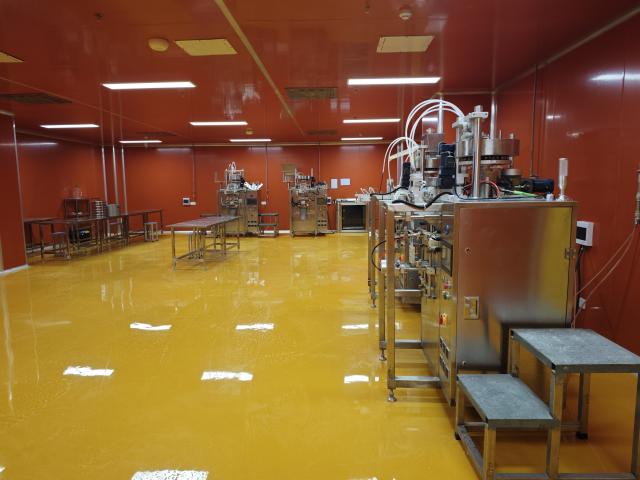
Functional oral pouches are consumed directly, so contamination control starts with facility design — not just lab testing. Our Hunan factory operates a 100,000-class (ISO Class 8) clean workshop purpose-built for plant-fiber pouch production. This article explains how zoning and unidirectional flow protect every batch.
Why zoning matters
A single production floor that handles raw materials, mixing, filling and packaging in the same open space creates cross-contact risk. Even with thorough cleaning between runs, allergen residues or flavor carryover can affect sensitive batches. Our facility separates the workflow into four controlled zones: raw-material quarantine, compounding and mixing, pouch filling and sealing, and primary/secondary packaging. Each zone has its own air handling, personnel access protocol and equipment set.
Unidirectional material flow
Materials move through the facility in one direction — from incoming quarantine, through compounding, into filling and out to finished goods. There are no return paths or shared corridors between zones. This eliminates the possibility that a finished can rolls back through a raw-material staging area, or that a mixing vessel passes through a filling room after being moved for cleaning.
Dedicated lines per formulation family
We group formulations by functional category — energy, focus, nootropic, sports and relaxation — and assign dedicated filling lines to each family. A caffeine-heavy energy formula never shares a hopper with a botanical nootropic blend. This reduces changeover time and removes the most demanding cleaning validation scenarios.
Personnel and gowning
Each zone requires specific gowning. Operators moving from the raw-material area into the filling zone pass through a gowning change room with separate footwear. Visitors and maintenance staff follow the same protocol. Air pressure differentials keep particulates from migrating between zones.